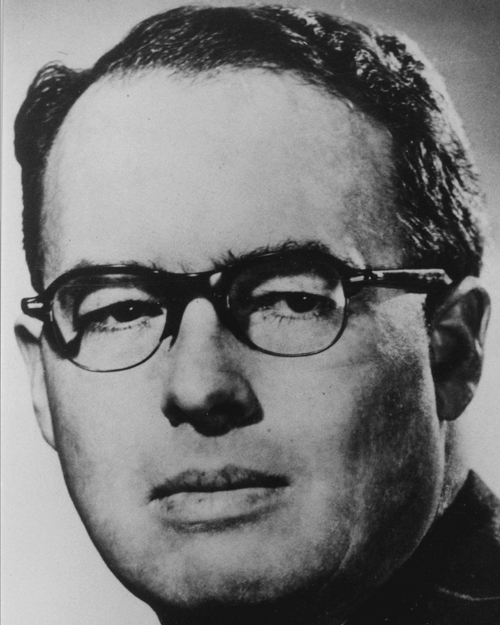
Ralph Allen
August 25, 1913 – December 2, 1966
Inducted 1988
Primary Outlet
Winnipeg Tribune, Maclean's
Ralph Allen boarded a train to Winnipeg at just 16 years old, armed with less than five dollars, a handful of hockey stories he’d written for a smalltown Saskatchewan newspaper and a letter of recommendation from his father.
His goal was clear; he wanted to be a sportswriter for the Winnipeg Tribune.
He achieved that, earning $15 a week in 1930.
Born in Winnipeg on Aug. 25, 1913, but raised in Oxbow, Allen approached sports journalism through a unique lens. Rather than focusing solely on scores and stats, he honed in on the human element. Even readers who had never watched a game could connect with his stories, which prioritized emotion, character and the human experience within sport.
Allen left the Tribune to become a sportswriter for The Globe and Mail in 1938, but made his biggest impact as the paper’s war correspondent during the Second World War. He reported from the front lines during the D-Day landings, the liberation of Paris and the Nuremberg Trials. His wartime dispatches stood out for their honesty and for offering a soldier’s-eye view of the conflict.
After returning from the war, Allen’s interest in covering sports diminished. In 1950, he became the fifth editor of Maclean’s magazine, where he led the publication into a new era of Canadian journalism. In 1960, he stepped down as editor to focus on writing full-time.
Allen authored six books during his career: Homemade Banners (1946), The Chartered Libertine (1954), Peace River Country (1958), Ordeal by Fire (1961), Ask the Name of the Lion (1962) and The High White Forest (1964). His writing spanned fiction and non-fiction, with a focus on Canadian identity, history and the effects of war.
In 1964, he became managing editor of the Toronto Daily Star, a position he held until his passing on Dec. 2, 1966.
His earlier coverage of football was recognized when he was inducted into the media wing of the Canadian Football Hall of Fame in 1990
Ralph Allen was inducted into the Manitoba Sportswriters and Sportscasters Association Media Roll of Honour in 1988.
His goal was clear; he wanted to be a sportswriter for the Winnipeg Tribune.
He achieved that, earning $15 a week in 1930.
Born in Winnipeg on Aug. 25, 1913, but raised in Oxbow, Allen approached sports journalism through a unique lens. Rather than focusing solely on scores and stats, he honed in on the human element. Even readers who had never watched a game could connect with his stories, which prioritized emotion, character and the human experience within sport.
Allen left the Tribune to become a sportswriter for The Globe and Mail in 1938, but made his biggest impact as the paper’s war correspondent during the Second World War. He reported from the front lines during the D-Day landings, the liberation of Paris and the Nuremberg Trials. His wartime dispatches stood out for their honesty and for offering a soldier’s-eye view of the conflict.
After returning from the war, Allen’s interest in covering sports diminished. In 1950, he became the fifth editor of Maclean’s magazine, where he led the publication into a new era of Canadian journalism. In 1960, he stepped down as editor to focus on writing full-time.
Allen authored six books during his career: Homemade Banners (1946), The Chartered Libertine (1954), Peace River Country (1958), Ordeal by Fire (1961), Ask the Name of the Lion (1962) and The High White Forest (1964). His writing spanned fiction and non-fiction, with a focus on Canadian identity, history and the effects of war.
In 1964, he became managing editor of the Toronto Daily Star, a position he held until his passing on Dec. 2, 1966.
His earlier coverage of football was recognized when he was inducted into the media wing of the Canadian Football Hall of Fame in 1990
Ralph Allen was inducted into the Manitoba Sportswriters and Sportscasters Association Media Roll of Honour in 1988.